
nil Pointer Error
Before You Start
- Applies to: Go 1.21+ (examples verified with Go 1.22) · Prerequisites: Data Types · Read time: about 10 min
Introduction
During a coding session, I needed to call the Close() method to close multiple objects, like in the code below:
type A struct {
  b B
  c C
  d D
}

func (a A) Close() error {
  if a.b != nil {
    if err := a.b.Close(); err != nil {
      return err
    }
  }

  if a.c != nil {
    if err := a.c.Close(); err != nil {
      return err
    }
  }

    if a.d != nil {
        if err := a.d.Close(); err != nil {
            return err
        }
    }

  return nil
}
But writing so many if statements felt inelegant. Since B, C, and D all implement the Close method, I thought it could be more concise. So I put them into a slice and used a loop:
func (a A) Close() error {
  closers := []io.Closer{
    a.b,
    a.c,
    a.d,
  }

  for _, closer := range closers {
    if closer != nil {
      if err := closer.Close(); err != nil {
        return err
      }
    }
  }
  return nil
}
This seemed better, so let's run it and see:
func main() {
  var a A
  if err := a.Close(); err != nil {
    panic(err)
  }
  fmt.Println("success")
}
The result was unexpected—it actually crashed. The error message indicated that a method cannot be called on a nil receiver. The if closer != nil in the loop seemed to have no filtering effect:
panic: value method main.B.Close called using nil *B pointerThe example above is a simplified version of a bug I encountered. Many beginners might make this kind of mistake at first. Let me explain what's happening.
Interface
In previous sections, it was mentioned that nil is the zero value for reference types, such as slices, maps, channels, functions, pointers, and interfaces. For slices, maps, channels, and functions, they can all be viewed as pointers pointing to concrete implementations.
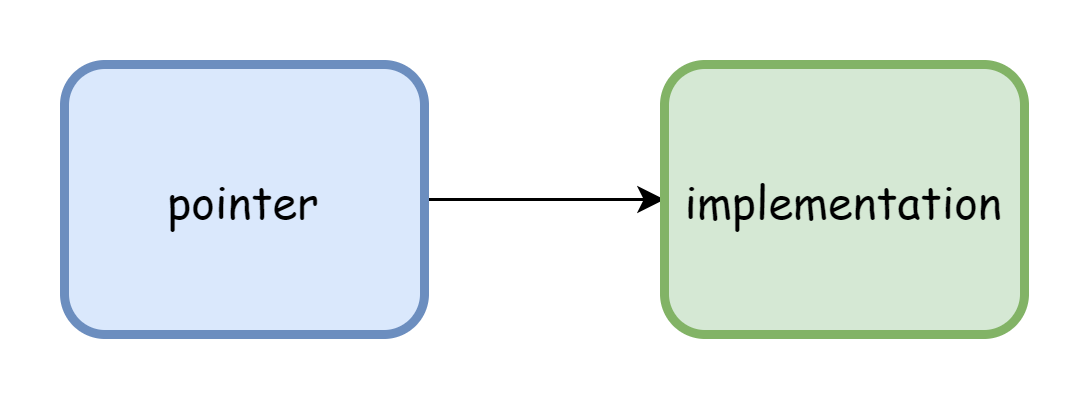
But interfaces are different. An interface consists of two things: a type and a value.
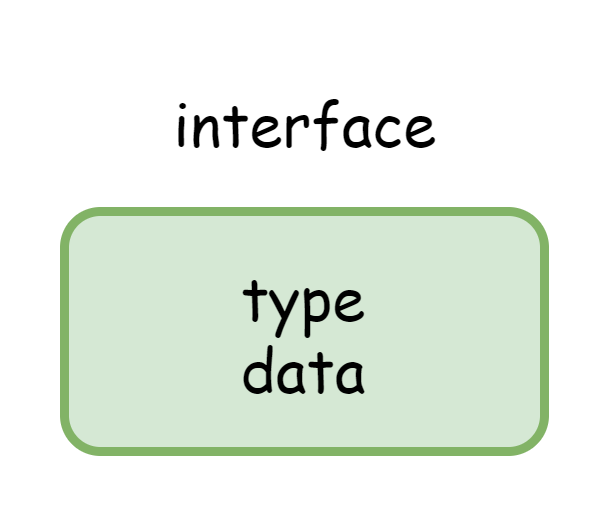
When trying to assign nil to a variable, it fails to compile and shows the following message:
use of untyped nil in assignmentThe content roughly indicates that a variable with value untyped nil cannot be declared. Since there's untyped nil, there must be typed nil, and this situation often occurs with interfaces. Consider a simple example:
func main() {
  var p *int
  fmt.Println(p)
  fmt.Println(p == nil)
  var pa any
  pa = p
  fmt.Println(pa)
  fmt.Println(pa == nil)
}
Output:
<nil>
true
<nil>
false
The result is very strange. Clearly pa outputs nil, but it doesn't equal nil. We can use reflection to see what it actually is:
func main() {
  var p *int
  fmt.Println(p)
  fmt.Println(p == nil)
  var pa any
  pa = p
  fmt.Println(reflect.TypeOf(pa))
  fmt.Println(reflect.ValueOf(pa))
}
Output:
<nil>
true
*int
<nil>
From the result, we can see it's actually (*int)(nil). This means pa stores the type *int, while its actual value is nil. When performing equality comparison on interface values, it first checks if their types are equal. If types are not equal, it directly determines they're not equal, then checks if values are equal. This interface comparison logic can be referenced in the cmd/compile/internal/walk.walkCompare function.
Therefore, if you want an interface to equal nil, both its value and type must be nil. This is because the type in an interface is actually also a pointer:
type iface struct {
  tab  *itab
  data unsafe.Pointer
}
If you want to bypass the type and directly check if its value is nil, you can use reflection. Here's an example:
func main() {
  var p *int
  fmt.Println(p)
  fmt.Println(p == nil)
  var pa any
  pa = p
  fmt.Println(reflect.ValueOf(pa).IsNil())
}
Using IsNil(), you can directly check if its value is nil, avoiding the problem mentioned above. So in daily use, if a function's return value is an interface type and you want to return a zero value, it's best to return nil directly, not any concrete implementation's zero value. Even if it implements the interface, it will never equal nil, which could lead to the error in the example.
Summary
After solving the problem above, let's look at the following examples:
When a struct's receiver is a pointer receiver, nil is usable. Consider this example:
type A struct {

}

func (a *A) Do()  {

}

func main() {
  var a *A
  a.Do()
}
This code runs normally without null pointer errors.
When a slice is nil, you can access its length and capacity, and you can append elements to it:
func main() {
  var s []int
  fmt.Println(len(s))
  fmt.Println(cap(s))
  s = append(s, 1)
}
When a map is nil, you can still access it, but a nil map is read-only. Attempting to write will cause a panic:
func main() {
  var s map[string]int
  i, ok := s[""]
  fmt.Println(i, ok)
  fmt.Println(len(s))

  // Attempting to write causes panic
  s["a"] = 1 // panic: assignment to entry in nil map

}
These nil characteristics in the examples above might be confusing, especially for Go beginners. nil represents the zero value for the types mentioned above, which is the default value. Default values should exhibit default behavior, which is exactly what Go's designers intended: to make nil more useful rather than immediately throwing null pointer errors. This philosophy is also reflected in the standard library. For example, starting an HTTP server can be written like this:
http.ListenAndServe(":8080", nil)We can directly pass a nil Handler, and the http library will use the default Handler to process HTTP requests.
TIP
If interested, you can watch this video Understanding nil - Gopher Conference 2016, which is very clear and easy to understand.
Complete Example
The program below runs as-is: copy it into a file and execute go run main.go, or paste it into the Go Playground.
package main

import "fmt"

type MyError struct{}

func (e *MyError) Error() string { return "my error" }

func returnsNil() error { return nil }

func returnsTypedNil() error {
	var e *MyError
	return e // typed nil: the interface is NOT nil
}

func main() {
	fmt.Println(returnsNil() == nil)

	err := returnsTypedNil()
	fmt.Println(err == nil)

	if err != nil {
		fmt.Println("not nil:", err)
	}
}
Expected output:
true
false
not nil: my error
Common Pitfalls
- A nil interface and a typed nil inside an interface are different.
returnsTypedNil()returns anerrorholding(*MyError)(nil), soerr == nilisfalse. - Calling a method on a nil pointer is only safe if the method handles it. Value receivers dereference the pointer and panic.
- Nil maps and nil slices behave differently. Reads from a nil map are fine but writes panic;
appendon a nil slice works. - Nil channels block forever. Sending or receiving on a nil channel blocks the goroutine permanently — in a
selectthat case is simply never chosen. - Interface equality compares dynamic type and value. Two nil pointers of different types are not equal inside interfaces even though both point to nothing.
Change Log
- 2026-10-14: Added "Before You Start" notes, a complete runnable example with expected output, common pitfalls, and this change log.